Completing an N6 qualification is a major achievement, but for many TVET graduates, it is only part of the journey towards earning a National Diploma.
Across South Africa, thousands of students complete the theoretical component of their studies every year but are unable to graduate with a National Diploma because they still need practical workplace experience. Finding an employer willing to provide that experience can often be one of the biggest challenges graduates face after leaving college.
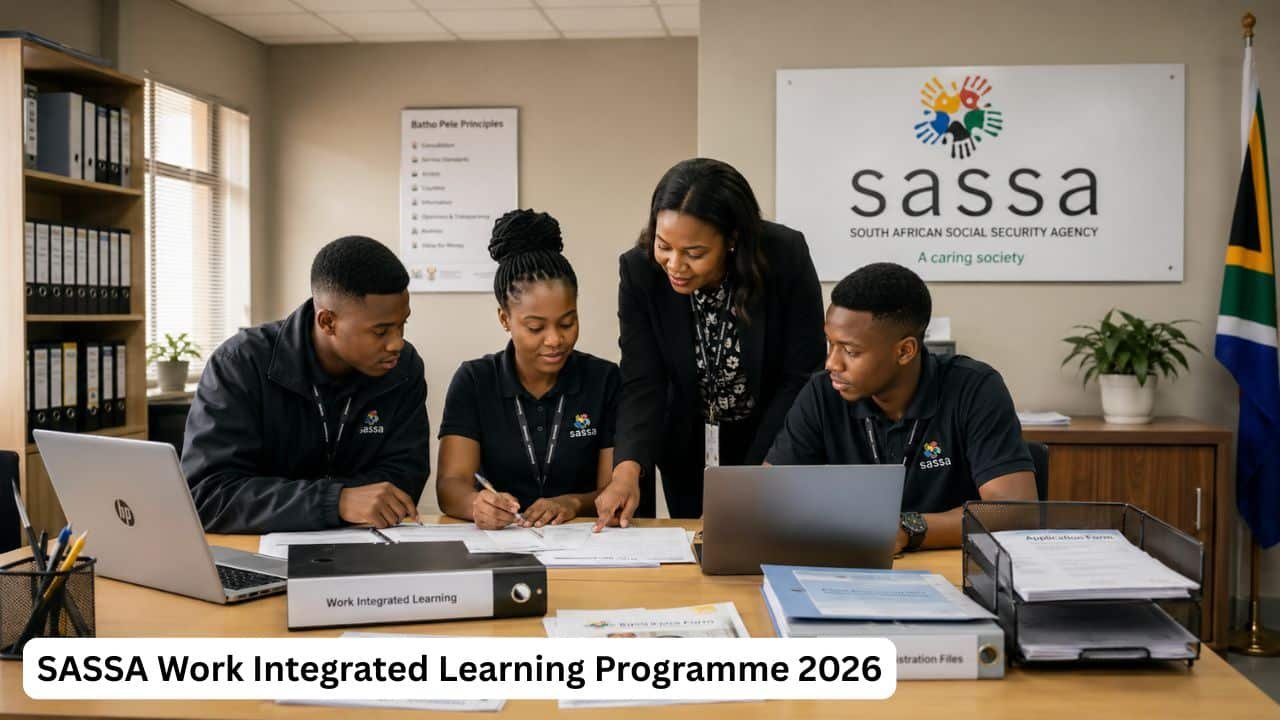
To help address this challenge, the South African Social Security Agency (SASSA)has opened applications for its 2026 Work Integrated Learning (WIL) Programme, giving qualifying TVET graduates the opportunity to complete the workplace training required for their National Diploma.
Successful applicants will receive a monthly stipend of R5,865.25 while gaining practical experience within one of South Africa’s largest public institutions. The programme runs for up to 18 months, allowing participants to apply what they learned at college while working alongside experienced professionals in a government environment.
For graduates who have been searching for workplace exposure, this programme offers more than financial support. It provides structured learning, professional mentorship and the opportunity to develop practical skills that employers continue to value across the public and private sectors.
Applications close on 31 July 2026, and eligible candidates are encouraged to prepare their applications as early as possible.
Programme at a Glance
Employer
South African Social Security Agency (SASSA)
Programme
Work Integrated Learning (WIL) Programme 2026
Programme Type
Workplace Training
Duration
Up to 18 Months
Monthly Stipend
R5,865.25
Minimum Qualification
N6 Certificate or Official Statement of Results
Location
Limpopo (Programme opportunities advertised by SASSA)
Application Method
Postal or Hand Delivery
Closing Date
31 July 2026
What Is Work Integrated Learning?
Work Integrated Learning, commonly known as WIL, is a structured form of workplace training that allows students to apply what they have learned in the classroom within a real working environment.
For many TVET qualifications, completing workplace training is a compulsory requirement before a National Diploma can be awarded.
Instead of moving directly into permanent employment, learners spend time working under supervision while developing practical skills related to their field of study.
This combination of theory and workplace experience helps graduates understand how their knowledge is applied in everyday professional settings.
It also gives employers an opportunity to mentor young professionals while introducing them to workplace systems, policies and responsibilities.
Why Workplace Experience Matters
One of the most common frustrations among graduates is hearing employers ask for experience before offering employment.
Work Integrated Learning helps bridge that gap.
Rather than leaving graduates to search for workplace exposure on their own, structured WIL programmes provide opportunities to develop practical skills in organisations where experienced employees can offer guidance and support.
During a placement, learners are expected to apply their academic knowledge while developing important workplace behaviours such as:
Professional communication.
Time management.
Teamwork.
Problem-solving.
Record management.
Workplace ethics.
Accountability.
These skills cannot always be learned in a classroom, yet they are often what employers value most when recruiting entry-level staff.
For many participants, a WIL placement becomes the first professional experience listed on their CV.
About the SASSA Work Integrated Learning Programme
The South African Social Security Agency is responsible for administering social assistance programmes to millions of South Africans.
To support skills development, the agency regularly provides workplace learning opportunities for students who need practical experience to complete their qualifications.
The 2026 Work Integrated Learning Programme is aimed specifically at TVET graduates who have completed an N6 Certificate or obtained an official Statement of Results, but who still require workplace exposure before they can qualify for a National Diploma.
Participants will be placed in different sections of the organisation where they can gain practical experience related to their field of study while working under the guidance of experienced officials.
The programme combines structured workplace learning with professional mentorship, allowing participants to build confidence while understanding how government departments operate.
Why This Programme Matters
Many graduates focus only on the monthly stipend when considering a workplace programme.
While the R5,865.25 monthly stipend provides welcome financial support, the greatest value often lies in the experience gained during the placement.
Government workplaces expose learners to professional systems, public administration, organisational procedures and service delivery standards that are difficult to replicate in a classroom.
Participants also gain experience working within multidisciplinary teams, communicating professionally with colleagues and learning how policies are implemented in practice.
These experiences help graduates develop confidence while preparing them for future employment opportunities.
Although completing the programme does not guarantee permanent employment at SASSA, the workplace exposure and practical skills gained can strengthen future job applications in both the public and private sectors.
More Than Completing a Diploma
For many students, Work Integrated Learning is viewed simply as the final requirement before graduation.
In reality, it is often the stage where classroom knowledge begins to make practical sense.
Tasks that once existed only in textbooks become part of everyday work.
Learners begin understanding how organisations solve problems, manage information, support communities and deliver public services.
These experiences not only help complete academic requirements but also prepare graduates for the expectations of professional employment.
For many young South Africans, this transition from student to workplace professional becomes one of the most valuable parts of their educational journey.
One of the strengths of the SASSA Work Integrated Learning (WIL) Programme is that it offers placements across several business units within the organisation rather than focusing on a single department.
This allows TVET graduates from different academic backgrounds to apply for opportunities that closely match the subjects they completed during their N6 studies.
Each position has its own reference number and qualification requirements, making it important to apply for the vacancy that best aligns with your field of study.
Submitting an application for a position that does not match your qualification may reduce your chances of being considered.
Below is an overview of the opportunities currently available.
Regional Executive Manager’s Office
Reference Number: SASTv-01
Suitable N6 Qualifications
Public Management
Office Management
Management Assistant
This placement offers exposure to the administrative side of senior government management.
Learners may gain experience in:
Office administration.
Executive support.
Meeting coordination.
Records management.
Professional communication.
Diary management.
Government correspondence.
For graduates interested in public administration or executive support roles, this placement provides valuable insight into how senior government offices operate.
Facilities Management
Reference Number: SASTv-02
Suitable N6 Qualifications
Office Administration
Public Administration
Facilities Management plays an important role in ensuring government buildings operate efficiently.
Learners may gain exposure to:
Building administration.
Asset management.
Office support.
Service coordination.
Workplace compliance.
Records administration.
Understanding how facilities are managed can also create future opportunities in property administration and government operations.
Security Management
Reference Number: SASTv-03
Suitable N6 Qualifications
Public Management
Public Administration
Business Administration
Security Management
This placement introduces learners to the administrative and operational side of organisational security.
Participants may develop knowledge in:
Security administration.
Incident reporting.
Risk awareness.
Workplace safety.
Government security procedures.
Records management.
Although this is not a security officer position, learners gain valuable experience supporting security management functions within a professional government environment.
Human Capital Management
Reference Number: SASTv-04
Suitable N6 Qualifications
Human Resource Management
Human Resource Development
Labour Relations
Human Capital Management focuses on supporting employees throughout their employment journey.
Learners may gain practical experience in:
Recruitment administration.
Employee records.
Training coordination.
Human resource documentation.
Labour relations support.
Staff development activities.
For graduates hoping to build careers in Human Resources, this placement provides valuable workplace exposure.
Supply Chain Management
Reference Number: SASTv-05
Suitable N6 Qualifications
Financial Accounting
Financial Management
Supply Chain Management is responsible for ensuring organisations purchase goods and services responsibly while complying with government procurement regulations.
Participants may gain experience in:
Procurement administration.
Supplier documentation.
Purchasing processes.
Inventory administration.
Contract support.
Financial record management.
Supply Chain professionals continue to be in demand across both public and private sector organisations.
Finance: Debt and Revenue Management
Reference Number: SASTv-06
Suitable N6 Qualifications
Financial Accounting
Financial Management
This placement offers practical exposure to financial administration within a government environment.
Learners may develop skills in:
Financial record keeping.
Revenue administration.
Debt management.
Budget support.
Financial reporting.
Administrative compliance.
Graduates interested in accounting or financial administration can benefit from understanding how public sector financial systems operate.
Fraud and Risk Management
Reference Number: SASTv-07
Suitable N6 Qualifications
Public Administration
Fraud and Risk Management
Protecting public resources is an important responsibility for every government institution.
Participants may gain exposure to:
Risk management processes.
Fraud awareness.
Compliance monitoring.
Internal controls.
Governance principles.
Administrative investigations.
Understanding risk and compliance is becoming increasingly valuable across government, banking and corporate sectors.
What Participants Will Gain
Many applicants focus first on the monthly stipend.
While the financial support is certainly important, the long-term value of the programme often comes from the workplace experience learners gain.
Successful participants may benefit from:
Workplace Experience
One of the biggest challenges facing TVET graduates is obtaining practical experience required for a National Diploma.
This programme provides structured workplace exposure under professional supervision.
Professional Mentorship
Participants work alongside experienced government employees who provide guidance throughout the placement.
Learning directly from professionals helps graduates understand workplace expectations that cannot be fully taught in a classroom.
Public Sector Experience
Government administration operates within unique policies, legislation and service delivery standards.
Working inside a national government institution helps learners understand these systems while developing practical administrative skills.
Monthly Financial Support
Successful participants receive a monthly stipend of R5,865.25 during the programme.
Although this is not a permanent salary, it helps support learners while completing their workplace training.
Progress Towards a National Diploma
Perhaps the most important benefit is that learners complete the workplace component required for many TVET National Diploma qualifications.
For many graduates, this programme represents the final step before qualifying for their diploma.
Who Can Apply?
The programme is intended for South African TVET graduates who still require Work Integrated Learning before obtaining their National Diploma.
Applicants should generally:
Be South African citizens.
Have completed an N6 qualification or possess an official Statement of Results.
Require workplace training to complete their National Diploma.
Obtain a letter from their TVET College confirming that Work Integrated Learning is still required.
Meet the qualification requirements for the specific position they are applying for.
Meeting the minimum requirements does not automatically guarantee selection.
Because opportunities are limited, applicants are encouraged to submit complete and accurate applications before the closing date.
Why Choosing the Correct Reference Number Matters
One mistake that often delays government applications is using the wrong reference number.
Each WIL placement advertised by SASSA has its own unique reference number linked to a specific department and qualification.
Before completing your application:
Read the advert carefully.
Confirm that your N6 qualification matches the position.
Copy the reference number exactly as it appears.
Apply for the opportunity that best fits your academic background.
Taking a few extra minutes to verify these details can help ensure your application reaches the correct recruitment team.
Documents You’ll Need Before Applying
Before you begin your application, take a few minutes to gather all the required documents.
Preparing everything in advance can make the application process much smoother and reduce the risk of submitting an incomplete application.
According to the advertisement, applicants should prepare the following:
A completed New Z83 Application Form.
A comprehensive and up-to-date Curriculum Vitae (CV).
Your N6 Certificate or an official Statement of Results.
A letter from your TVET College confirming that you require Work Integrated Learning (WIL) to complete your National Diploma.
A CV that clearly lists the subjects and modules completed during your N6 studies.
One important point many applicants overlook is that SASSA does not require certified copies of qualifications, ID documents or other supporting documents during the initial application stage. These may only be requested from shortlisted candidates later in the recruitment process.
Always read the vacancy advertisement carefully before submitting your application, as the requirements in the advert take priority.
Applicants must submit their applications using one of the methods specified in the advertisement.
Before submitting your application:
Ensure your Z83 form has been completed correctly.
Attach your comprehensive CV.
Include your N6 qualification or Statement of Results.
Attach the required TVET College confirmation letter.
Double-check that you have written the correct reference number for the position you are applying for.
Postal Applications
Applications may be posted to:
Attention: Human Capital Management
Private Bag X120
Marshalltown
2107
Hand Delivery
Applications may also be delivered by hand to:
SASSA Regional Office
Ground Floor
222 Smit Street
Braamfontein
Johannesburg
2017
Remember to submit your application before the closing date.
Late applications are unlikely to be considered.
Practical Advice Before You Apply
Thousands of graduates apply for government workplace programmes every year.
Although no one can guarantee selection, taking time to prepare a complete and professional application can help you present yourself well.
Update Your CV
Your CV should do more than simply list your qualifications.
Include:
Subjects completed.
Practical projects.
Computer skills.
Leadership experience.
Volunteer work.
Student representative roles.
Community involvement.
Short courses or additional training.
If you have completed practical assignments during your N6 studies, include them where relevant.
Match Your Qualification to the Correct Position
One of the most common mistakes applicants make is applying for positions that do not match their qualification.
For example, someone with an N6 in Human Resource Management should apply for the Human Capital Management placement rather than Financial Management.
Taking time to choose the correct opportunity demonstrates attention to detail.
Don’t Wait Until the Last Day
Government recruitment often receives a large number of applications close to the deadline.
Submitting your application early gives you time to correct mistakes or replace missing documents if necessary.
Keep Copies of Everything
Before posting or delivering your application, make copies of:
Your completed Z83.
Your CV.
Your college letter.
Your qualification documents.
Keeping records can be helpful if you need to follow up later.
Be Honest
Only include qualifications and experience that you actually have.
Providing false information may lead to disqualification or other consequences if discovered during the recruitment process.
Professional integrity begins with an honest application.
What Skills Will You Develop?
One of the biggest benefits of the programme is the opportunity to develop workplace skills that employers continue to value long after the placement ends.
Participants may strengthen their knowledge in:
Public Administration.
Office Administration.
Human Resource Management.
Financial Administration.
Supply Chain Management.
Risk and Fraud Management.
Government procedures.
Professional communication.
Records management.
Report writing.
Workplace ethics.
Customer service.
These skills can support future careers in both government and private organisations.
Career Opportunities After Completing the Programme
Completing Work Integrated Learning does not automatically guarantee permanent employment at SASSA.
However, it does provide graduates with valuable workplace experience that can strengthen future job applications.
Depending on your qualification and career goals, opportunities after the programme may include:
Administrative Officer
Supporting government departments, municipalities or private organisations with administrative operations.
Human Resources Officer
Assisting with recruitment, employee records and staff development.
Supply Chain Officer
Supporting procurement, logistics and contract administration.
Applying administrative and communication skills across national, provincial or local government.
The practical experience gained during the programme can also make graduates more competitive when applying for internships, graduate programmes or entry-level permanent positions.
Frequently Asked Questions
Who can apply?
South African TVET graduates who have completed an N6 qualification or hold an official Statement of Results and still require Work Integrated Learning to obtain their National Diploma.
How much is the monthly stipend?
Successful participants receive R5,865.25 per month during the programme.
How long does the programme last?
Placements may run for up to 18 months, depending on operational requirements and the participant’s training needs.
Do I need previous work experience?
No. The programme is specifically intended to provide workplace experience for graduates who still need practical training.
Can I email my application?
No. According to the advertisement, applications should be submitted by post or hand delivery using the addresses provided.
Does completing the programme guarantee a permanent job?
No. Completion of the Work Integrated Learning Programme does not automatically result in permanent employment. However, participants gain valuable workplace experience that may improve future employment prospects.
When is the closing date?
Applications close on 31 July 2026. Submitting your application early is strongly recommended.
Final Thoughts
For many TVET graduates, finding the workplace experience required for a National Diploma can be one of the most difficult stages of their educational journey.
The SASSA Work Integrated Learning Programme 2026 helps bridge that gap by providing structured workplace training, professional mentorship and practical experience within one of South Africa’s largest public institutions.
Beyond the R5,865.25 monthly stipend, participants gain something that can have an even greater long-term impact: experience working in a professional environment where they can apply their knowledge, develop confidence and build skills that employers continue to value.
If you meet the eligibility requirements, take time to prepare a complete application, ensure your documents are accurate and submit everything before the closing date.
Every successful career begins with a first opportunity. For many TVET graduates, this programme could be the step that leads from the classroom to the workplace.
Editorial Note
This article has been prepared by SETA EduFeeds using information available at the time of publication.
Programme details, placement locations, application procedures, stipend arrangements and recruitment requirements may change. Applicants should always verify the latest information in the official SASSA advertisement before submitting their applications.
SETA EduFeeds is an independent education and career publication. We do not process applications, influence recruitment decisions or represent SASSA. Our mission is to help South Africans better understand education, training and employment opportunities so they can apply with confidence.
Nonhlanhla Ndlovu
Nonhlanhla Ndlovu is the Founder and Editor-in-Chief of Seta.EduFeeds, an independent South African publication dedicated to helping students, graduates, and job seekers discover verified learnerships, internships, bursaries, graduate programmes, apprenticeships, and entry-level career opportunities.
With a strong focus on South Africa’s skills development and employment landscape, she researches and publishes practical, easy-to-understand articles that help readers navigate application requirements, recruitment processes, and career pathways. Her editorial work aims to make complex information accessible, especially for first-time applicants entering the job market.
Before an article is published, Nonhlanhla verifies information using official employer, government, SETA, university, and institutional sources whenever possible. She believes that opportunity journalism should do more than report vacancies—it should explain what opportunities mean, who qualifies, how to apply correctly, and how applicants can avoid common mistakes.
Under her editorial leadership, EduFeeds has become a trusted resource for thousands of South Africans looking for reliable information on education, training, and employment opportunities. The publication follows clear editorial standards that prioritise accuracy, transparency, regular content updates, and people-first reporting.
Beyond publishing opportunities, Nonhlanhla is passionate about empowering young South Africans with the knowledge needed to make informed career decisions. She believes that access to clear, trustworthy information can help reduce barriers to employment and improve access to life-changing opportunities.
When she is not researching new programmes or reviewing articles, she focuses on improving EduFeeds’ editorial quality, ensuring readers receive timely, accurate, and practical information that supports their education and career journeys.